Beckman Laser Institute
  • About Us
      • About Us
      • Mission & Vision
      • Message From the Founding Director
      • History
      • By the Numbers
      • Employment
      • News
  • Medical Clinic
      • Medical Clinic
      • Conditions & Treatments
      • Why Choose Us
      • Clinical Research Protocols
      • Our Physicians
      • Our Clinic Team
  • Research
      • Research
    • Core Research
      • Modeling & Computation
      • Multimodal Endoscopy
      • Microscopy & Microbeams
      • Diffuse Optical Imaging
      • Laser Therapy
    • Research Programs
      • COVID-19 RESEARCH
      • Medical Applications
      • Laser Microbeam Program (LAMP)
      • Wearable Sensors
    • Shared Resources
      • Shared UCI Access Resources
  • Education & Outreach
      • Education & Outreach
      • Prospective Students
      • Access to Careers in Engineering and Sciences (ACES)
      • Publications
      • Mechanical Ventilation Amid COVID
      • Leaders in Light
      • Multiscale Biophotonics Training Program
      • Events
      • LASER Magazine
      • Course Catalog
  • Industry
      • Industry
      • Photonic Incubator
      • Technology Transfer
      • Patents
      • Convergence Optical Sciences Initiative (COSI)
      • Corporate Partners
      • Advisory Board
  • People
      • People
      • Our Faculty
      • Our Founders
      • Directory
      • Our Research Team
      • Our Research Management Team
      • Our Administrative Team
  • Giving
      • Giving
      • Donate Online
  • How to Give
  • Ways to Give
  • Click to open the search input field Click to open the search input field Search
  • Menu Menu
Blog - Latest News
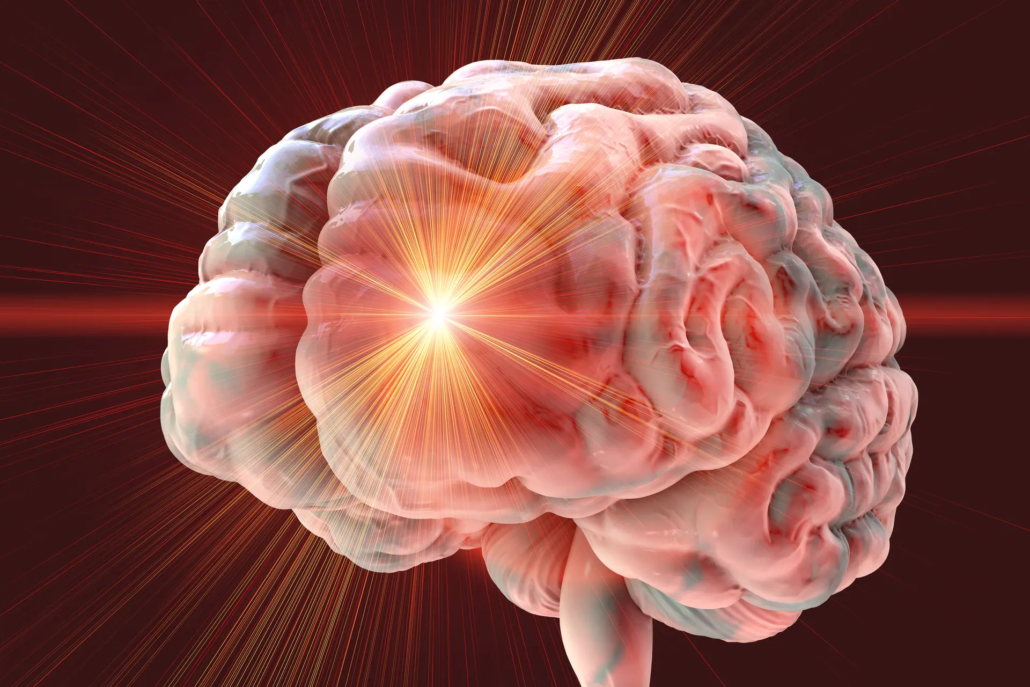
New findings open the door to treatments that ensure the movement of red blood cells through brain capillaries Depositphotos

A new cause of brain hemorrhage has been identified

November 20, 2023/ News /by Gabrielle Comfort

Photo: Depositphotos

By Bronwyn Thompson, New Atlas

In a significant development for brain health, scientists have demonstrated for the first time how hemorrhages can occur due to a faulty interaction between aged red blood cells and narrow capillaries. Until now, the cause of this serious condition has been brain bleeding that results from injured or damaged blood vessels.

“It has always been assumed that in order for cerebral hemorrhage to occur, blood vessels need to be injured or disrupted,” said co-corresponding author Xiangmin Xu, professor at University of California Irvine (UCI). “We found that increased red blood cell interactions with the brain capillaries represent an alternative source of development.”

The team identified how aged red blood cells ‘stall’ in the brain’s narrow network of capillaries, which result in microbleeds at the site. Cerebral microbleeds in older adults have been linked to a higher risk of developing Alzheimer’s disease, hypertension and ischemic stroke.

While capillaries – the smallest blood vessels in the body – employ a clever membranous mechanism to push out any blockages, it’s a system that begins to falter with age.

The 2010 study that identified this mechanism also found that it becomes 30 to 50% slower in an aging brain, and also results in the death of more capillaries.

The team used tert-butyl hydroperoxide to cause oxidative stress to red blood cells, then marked the cells with a fluorescent tag and injected them into the brains of mice. Through two different methods, they saw the red blood cells becoming stuck in the capillaries, before being cleared through the process known as endothelial erythrophagocytosis. But as the cells moved out, microglia inflammatory cells engulfed them, forming a brain hemorrhage.

“We have previously explored this issue in cell culture systems, but our current study is significant in expanding our understanding of the mechanism by which cerebral microbleeds develop,” said co-corresponding author Mark Fisher, professor at UCI’s School of Medicine. “Our findings may have profound clinical implications, as we identified a link between red blood cell damage and cerebral hemorrhages that occurs at the capillary level.”

The team says this finding presents new avenues of research and potential treatment to help an aging brain maintain capillary function and to prevent those aged cells from stalling along this essential transport route.

“We need to examine in detail the regulation of brain capillary clearance and also analyze how that process may be related to insufficient blood supply and ischemic stroke, which is the most common form of stroke, to help advance the development of targeted treatments,” Fisher added.

The study was published in the Journal of Neuroinflammation.

Source: University of California Irvine

Click here to read full New Atlas article.

Gabrielle Comfort

Author: Gabrielle Comfort

Share this entry
  • Share on Facebook
  • Share on X
  • Share on LinkedIn
  • Share on Reddit
  • Share by Mail
https://bli.uci.edu/wp-content/uploads/2023/11/download.webp 1280 1920 Gabrielle Comfort https://www.bli.uci.edu/wp-content/uploads/2017/09/white_transparent-1.png Gabrielle Comfort2023-11-20 11:35:002023-11-30 13:33:17A new cause of brain hemorrhage has been identified
Search Search

Categories

  • News
FOLLOW US ON SOCIAL MEDIA
  • Link to X_icon
  • Link to Facebook
  • Link to LinkedIn
  • Link to Youtube
  • Link to Instagram
  • Support BLIMC❤️
  • Contact US
  • For Staff
Link to: UCI Samueli School of Engineering 2022-23 Dean’s Report Link to: UCI Samueli School of Engineering 2022-23 Dean’s Report UCI Samueli School of Engineering 2022-23 Dean’s Report Link to: A New Understanding of Brain Hemorrhages: Exploring the Role of Red Blood Cell Interactions Link to: A New Understanding of Brain Hemorrhages: Exploring the Role of Red Blood Cell Interactions A New Understanding of Brain Hemorrhages: Exploring the Role of Red Blood Cell...
Scroll to top Scroll to top Scroll to top
Loading...

Insert/edit link

Enter the destination URL

Or link to existing content

    No search term specified. Showing recent items. Search or use up and down arrow keys to select an item.