LASIK without the laser? Rabbit eyeballs hint at a new option
/ News /by Gabrielle ComfortIn the lab, electromechanical reshaping can reshape the cornea without cutting tissue.
Laura Baisas | Aug 23, 2025 10:00 AM EDT
Figuring out a way to correct blurry vision is a part of life for many of us. In the United States alone, roughly six million people are estimated to have some sort of vision loss and another one million are totally blind.
To escape glasses and invasive contact lenses, many turn to more permanent corrective eye surgery, including the popular LASIK procedure. However, there might be a new vision correction method (that does not involve teeth) on the horizon that can do the same thing without the side effects. It was recently presented at the American Chemical Society’s annual meeting.
What is LASIK?
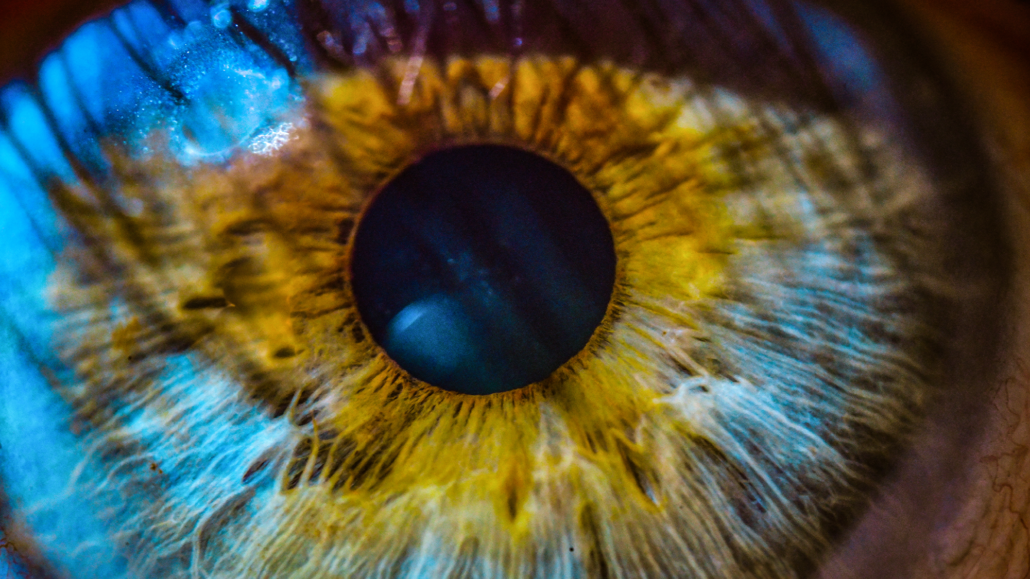
LASIK (or Laser-Assisted In Situ Keratomileusis) is a surgical procedure that uses a laser to reshape the cornea to correct vision. Human corneas are the dome-shaped, clear structures that sit at the front of the eye. They bend incoming light and focus it onto the retina. From the retina, the light is sent to the brain and interpreted as an image. If the cornea is misshapen, it doesn’t focus on the light properly, blurring the image that the brain is trying to interpret.
During LASIK, specialized lasers remove precise sections of the tissue to reshape the cornea. It is a very common procedure and considered low risk. However, it still has some negative side-effects including eye pain, dry eyes, and seeing halos. It also has some limitations and risks since cutting the cornea can compromise the structural integrity of the eye
“LASIK is just a fancy way of doing traditional surgery. It’s still carving tissue—it’s just carving with a laser,” said Michael Hill, a professor of chemistry at Occidental College who is working on a new way to correct vision without LASIK.
Enter electromechanical reshaping
The procedure that Hill and his collaborator Brian Wong are exploring can achieve this same cornea shaping goal without making an incision. It uses a process known as electromechanical reshaping (EMR). EMR has previously been used to to reshape cartilage-rich rabbit ears and change scars and skin in pigs.
“The whole effect was discovered by accident,” explains Wong, a professor and surgeon at the University of California, Irvine. “I was looking at living tissues as moldable materials and discovered this whole process of chemical modification.”
Within the human body, collagen-containing tissues like the corneas are held together like a magnet, with oppositely charged components fusing together. These tissues contain a lot of water. Applying electric voltage to these watery tissues lowers the pH, making them more acidic. When the pH is altered, the rigid attractions within tissue loosens up and makes the shape more malleable. If the original pH is restored, the tissue locks into a new shape.
In the experimental procedure, the team constructed specialized, platinum contact lenses. The lenses provided a template for the correct cornea shape. They placed the lens over a rabbit eyeball in a saline solution meant to mimic natural tears. When the team applied a small amount of voltage, the platinum lens generated the correct pH change. After roughly 60 seconds, the cornea conformed to the shape of the lens. The procedure took about the same amount of time that LASIK takes, but with fewer steps, less expensive equipment, and no incisions into the eye.
The team repeated this setup on 12 separate rabbit eyeballs. Ten of the eyeballs that the team studied were treated as if they had myopia, or nearsightedness. In all 10 “myopic” eyeballs, vision was theoretically improved since the eye’s targeted focusing power was fixed. The cells in these test eyeballs also survived the treatment, since the pH gradient was carefully controlled.
Additionally, other experiments found that the technique may be capable of reversing some cloudiness to the cornea.
In the early stage
While promising, it’s important to remember that this work is in its very early stages. The team will next go through what Wong describes as, “the long march through animal studies that are detailed and precise.” These include tests on a living rabbit instead of just its eyeball.
The team also plans to determine the types of vision problems that are possible to correct with EMR, such as nearsightedness, farsightedness, and astigmatism.
“There’s a long road between what we’ve done and the clinic,” says Hill. If the team can make it up to the operating room, this treatment could be less expensive and reverse blurry vision for good.
Click here to read full Popular Science article.

Author: Gabrielle Comfort