Laser-free vision correction uses electrical current to reshape eye
Imagine correcting your vision in under a minute – no lasers, blades or pain. Scientists have developed a novel, non-invasive technique that reshapes the cornea using only a mild electric current and a temporary pH shift. In early trials, it reversed myopia without the need for traditional surgery – and could be the most radical advancement in eyesight correction technology since LASIK.
This emerging method that can remodel the cornea through mild electric potential, known as electromechanical reshaping (EMR), was detailed by researchers from Occidental College and the University of California, Irvine, during the American Chemical Society’s Fall 2025 meeting this week.
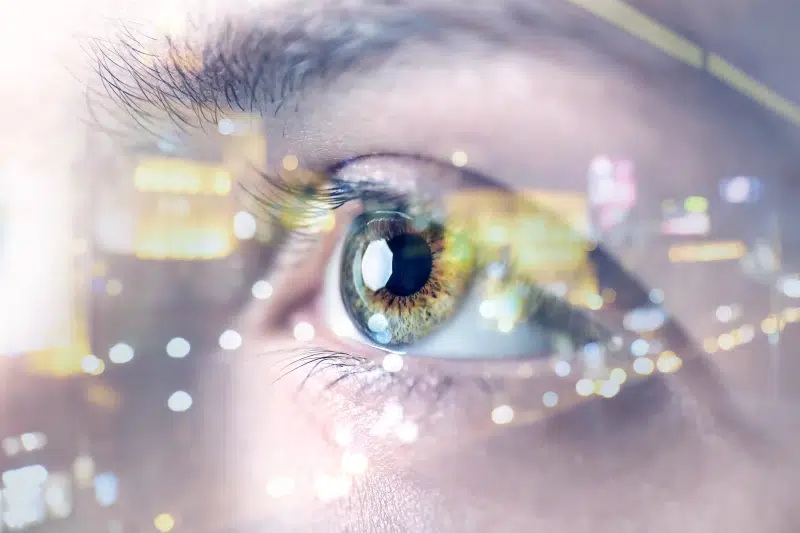
The cornea is the clear, dome-shaped surface at the front of the eye, acting as a transparent window that helps focus incoming light. It’s made of tightly packed collagen fibers and is designed to be strong and smooth. When light enters the eye, the cornea is the first lens it hits – and it’s here that most of light-bending (refraction) occurs in order to focus the light onto the retina at the rear of the eye. However, if the cornea has an irregular curve, it results in conditions such as nearsightedness (myopia) and farsightedness (hyperopia).
For those who want do do away with corrective lenses, the main option is LASIK (Laser-Assisted In Situ Keratomileusis) surgery, which uses a laser to reshape the cornea by removing microscopic amounts of tissue beneath a thin flap, allowing light to focus properly on the retina. While, for those suitable for treatment, LASIK has a high success rate – around 95% of patients go on to ditch their glasses only a few days after recovering from surgery – it’s expensive and invasive, and cutting into the cornea alters the structural integrity of the eye.
“LASIK is just a fancy way of doing traditional surgery,” said lead researcher and presenter Michael Hill, a professor in chemistry at Occidental College. “It’s still carving tissue – it’s just carving with a laser.”
Then, once the current stops and the pH returns to normal, the cornea hardens again and holds its mold-fitted shape. The whole process takes about a minute, requires no cutting or removal of tissue, and, so far, has shown no structural damage or cell death in the tested samples. And the researchers believe EMR could replace LASIK surgery.
“The whole effect was discovered by accident,” said Brian Wong, a professor and surgeon at the University of California, Irvine. “I was looking at living tissues as moldable materials and discovered this whole process of chemical modification.”
In the study, researchers tested the EMR process on 12 separate rabbit eyeballs, reshaping 10 of them to mimic the corrective effect required for nearsightedness (myopia). After a short exposure to the current, each cornea conformed to the shape built into the electrode “lens”, and preliminary measurements showed successful corneal correction – with zero incisions, lasers or trauma to the eye.
While EMR is still in its early stages of development and has had limited testing – on isolated eyes, not live models – Wong added that next comes “the long march through animal studies that are detailed and precise.” The team will also determine what type of cornea corrections are possible with EMR.
“There’s a long road between what we’ve done and the clinic [and commercial use],” Hill added. “But, if we get there, this technique is widely applicable, vastly cheaper and potentially even reversible.”
A 2023 paper in the journal ACS Biomaterials Science & Engineering detailed the development and use of EMR. The latest research was presented in a series of talks by researchers Michael Hill, Daniel Kim and Michelle Chen at the Fall 2025 meeting of the American Chemical Society this week.
Source: American Chemical Society via EurekAlert!
Click here to read full article on the New Atlas website.

Author: Gabrielle Comfort